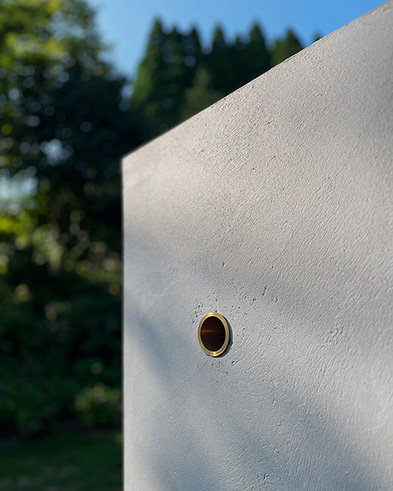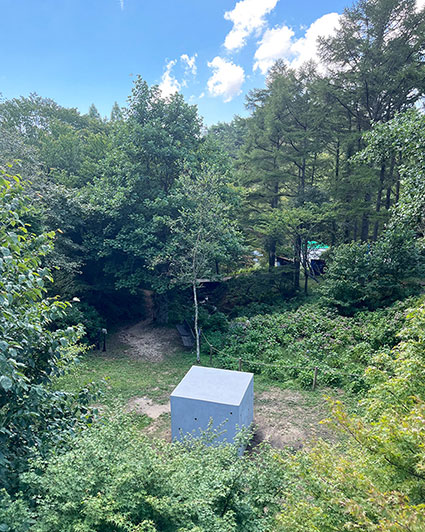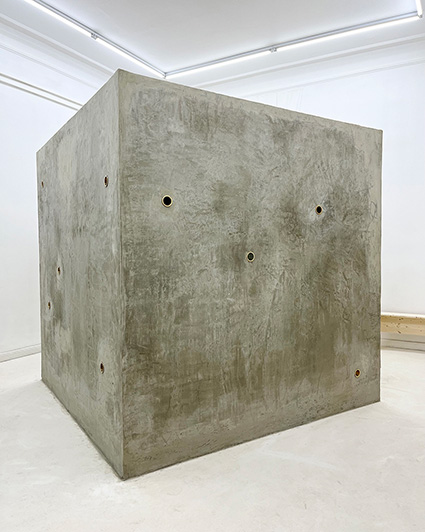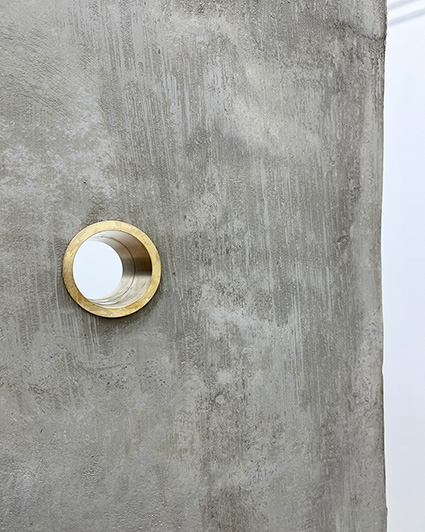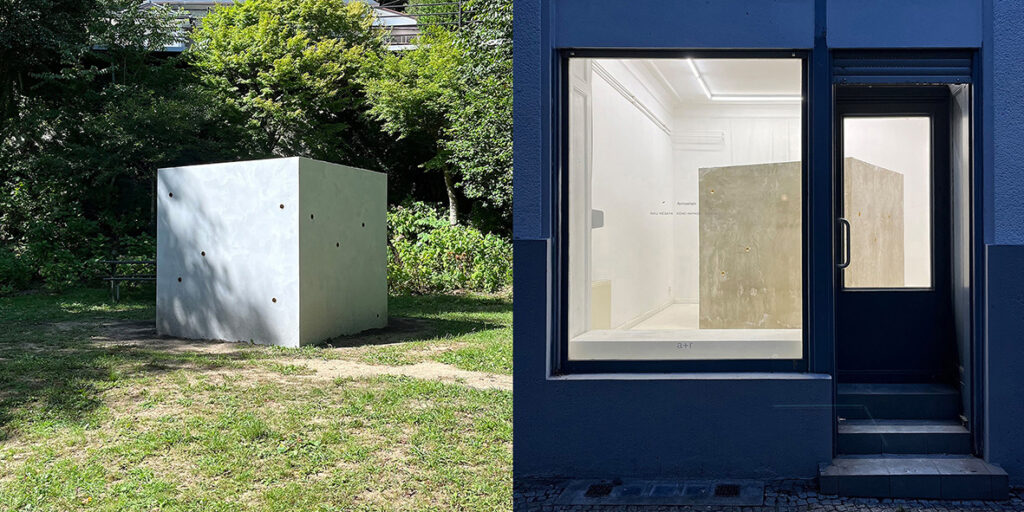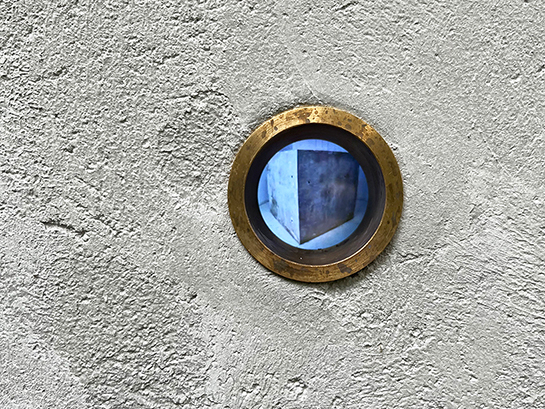
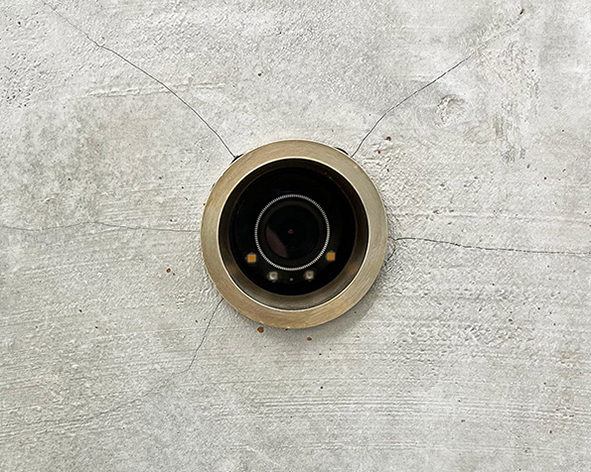
Based in Berlin, Ikegaya + Hayashi + Kamijo are pursuing diverse modes of expression that emerge from the intersection of art and architecture. fernsehen is a sculptural installation that places identical cubes in Rokko, Japan, and in Berlin, linking the two sites through video devices installed inside. The title fernsehen in German means “to watch television,” and its etymology traces back to “seeing into the distance.” Looking through the brass pipe openings cut into the cube, the viewer encounters different layers of vision: a monitor showing the other location, a lens capturing the here and now, a mirror reflecting the viewer’ s own image, or an aperture framing the landscape on the opposite side. In this way, the multilayered nature of “seeing” unfolds as an embodied experience.In Rokko, the movement of plants swaying in the wind and passing clouds appear, while in Berlin, the noise and bustle of the city emerge. When two distant places are simultaneously displayed, the space between them is folded through the work, and gazes intersect across the divide. This experience opens thought toward others afar or toward the future, guiding us toward a deeper, more layered way of seeing.
ベルリンを拠点に活動する池ヶ谷+林+上條は、それぞれに異なる実践を重ねながら、建築と美術を起点に多様な表現の可能性を探求する。 『fernsehen』は、日本の六甲とベルリンに同一の立方体を設置し、内部の映像機器を通して互いの風景を結ぶ立体作品である。タイトルの 「fernsehen」はドイツ語で「テレビを見る」を意味し、その語源を辿ると「遠くを見る」という意味に辿り着く。立方体に開けられた真鍮パイプの穴を覗くと、相手側の映像が映るモニター、こちら側を映しているレンズ、鑑賞者自身を映す鏡、あるいは向こう側の風景を切り取る貫通口があり、「見る」という行 為の多層性が体験として立ち現れる。六甲では風に揺れる植物や雲の流れ、ベルリンでは都市の喧騒が映り、環境の差異が映し出される。二つの異なる 場所が同時に映るとき、距離は作品を通して折り畳まれ、お互いの視線が交錯する。その経験は、遠くにいる他者や未来へと思考をひらき、奥行きある 眼差しへと導くだろう。
Selected Press: designboom>